
Books Are No Longer Just Books
Reading today doesn’t look like it used to. Books are no longer just about storytelling or knowledge in isolation. For a large part of the modern audience—especially students and young professionals—books have become tools for understanding life itself.
We don’t just read to escape anymore. We read to decode ourselves.
The books people resonate with today are the ones that reflect identity, behavior, emotions, and the confusing experience of growing up in a world that is constantly changing. Whether it’s psychology, self-development, or modern fiction, the value of a book now lies in how deeply it connects to real life.
Thinking About How We Think
Some books don’t just give answers—they change how we interpret decisions altogether. Thinking, Fast and Slow by Daniel Kahneman is one of those books. It explores how human thinking is split between instinctive reactions and slower, more logical reasoning. What makes it powerful is not just the psychology behind it, but the realization that most of what we consider “logical decisions” are actually influenced by unconscious bias.
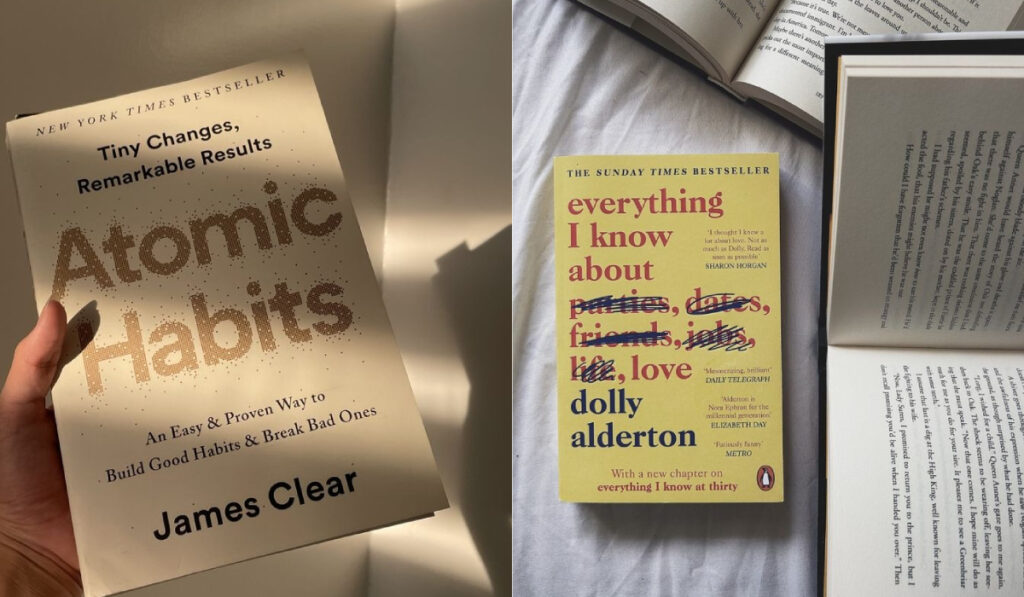
Similarly, Atomic Habits by James Clear shifts the focus away from motivation and toward systems. It reframes success not as a dramatic transformation, but as a result of small, repeated actions that slowly shape identity. These books don’t feel like traditional self-help anymore—they feel like manuals for understanding behavior.
Culture, Society, and the Bigger Picture
Some books zoom out further and force us to rethink how society itself is structured. Sapiens by Yuval Noah Harari does this by breaking down human history into patterns of belief, cooperation, and storytelling. It challenges the idea that the systems we live in are natural, instead showing them as human-made constructs.
Books like Outliers by Malcolm Gladwell continue this thread by questioning the myth of individual success. Instead of focusing only on talent, it highlights timing, environment, and opportunity—reminding us that success is rarely as personal as it looks.
These kinds of books don’t just inform. They reframe how we understand achievement, culture, and even fairness.
Emotional Reality in Modern Fiction
Fiction today feels different too. It is less about dramatic plots and more about emotional realism. Normal People by Sally Rooney captures this shift perfectly. It doesn’t rely on extraordinary events. Instead, it focuses on silence, distance, misunderstanding, and emotional complexity that feels familiar rather than exaggerated.
Books like Everything I Know About Love by Dolly Alderton explore similar territory—growing up, friendships, heartbreak, and the confusion of becoming an adult without clear instructions. These stories resonate because they don’t try to idealize life. They reflect it as it is.
Creativity, Work, and Expression
Another category of modern reading focuses on creativity and productivity, but in a more grounded way than traditional success literature. Steal Like an Artist by Austin Kleon reframes creativity not as originality from nothing, but as borrowing, remixing, and reinterpreting existing ideas. It removes the pressure of “being completely original” and replaces it with the idea of creative evolution.
Books like Deep Work by Cal Newport address the opposite problem—the fragmentation of attention. In a world filled with distractions, focus becomes a rare skill. The book emphasizes that meaningful work requires deep concentration, something increasingly difficult but increasingly valuable.
Why These Books Feel Different Now
What connects all these books is not genre, but relevance. They don’t just sit on shelves as “good reads.” They interact with how people live, think, and process daily experiences.
Modern readers are not looking for distant ideas. They are looking for reflection. They want books that feel like they understand the world they are already living in—digitally overwhelmed, emotionally complex, and constantly evolving.
Reading as Identity
The books people choose today often say something about who they are or who they are trying to become. A reading list is no longer just a collection of titles—it is a quiet expression of mindset.
Some books help people understand themselves. Others help them understand systems. A few help them understand emotions they didn’t have words for before.
Together, they form a kind of internal map.
Final Thought
The most powerful books today are not necessarily the most complex or the most famous. They are the ones that make people pause and rethink something they believed was already settled.
Because in the end, modern reading is not just about consuming ideas.
It is about reshaping them into something personal.